Master Singapore Primary Science — from P3 to PSLE
Clear lessons, exam-smart strategies, and the exact keywords PSLE markers look for — built topic by topic, year by year, straight from the MOE syllabus.
"I don't just want your child to remember the right answer — I want them to understand it so well they could explain it to anyone."
— Teacher
What you'll learn
What you'll be able to do
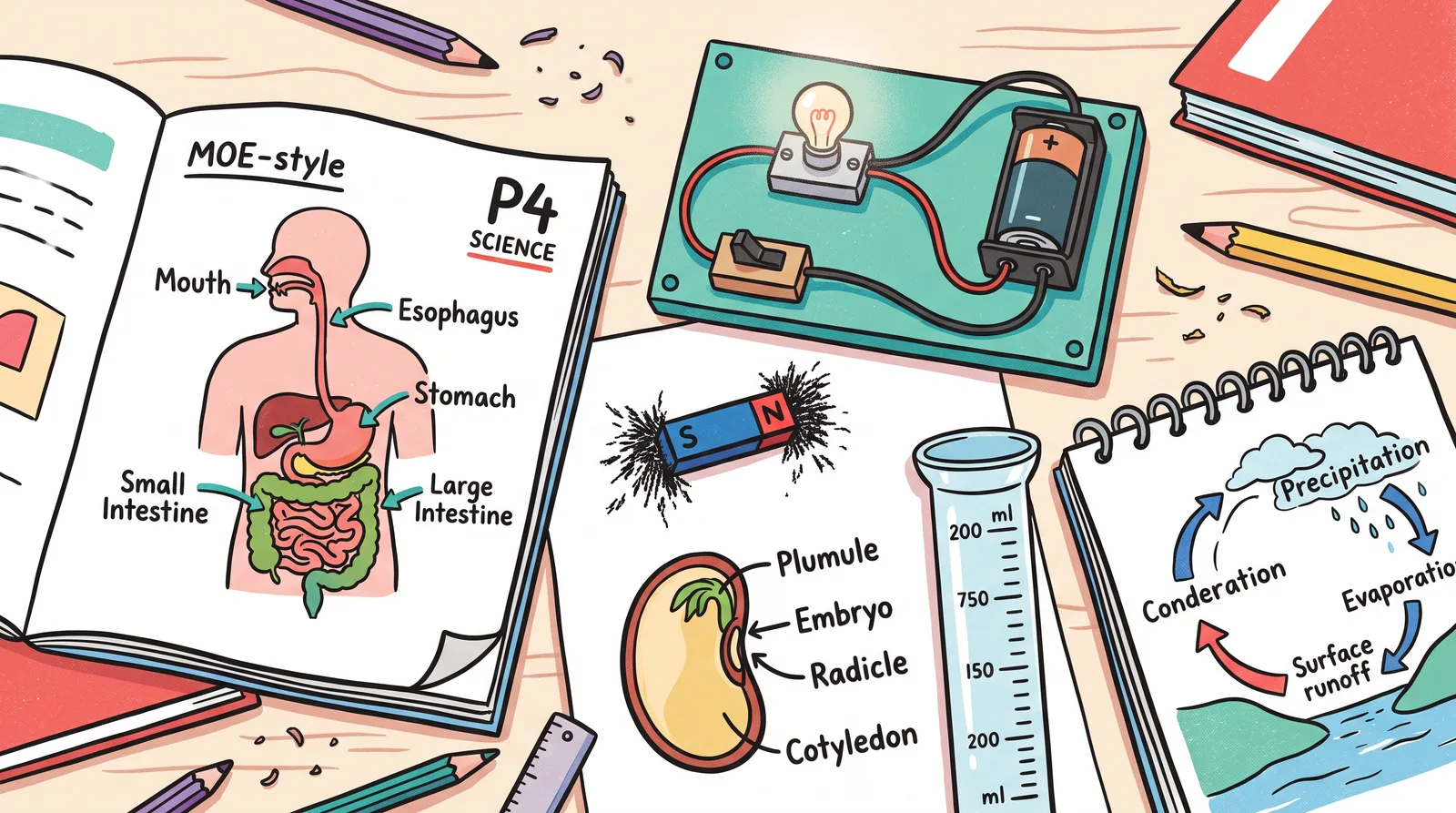
- Explain core P3–P6 MOE Science concepts — from life cycles and magnets to electricity and the water cycle — confidently and accurately
- Apply the 'Observe, Compare, Classify, Infer' scientific process skills to tackle any open-ended exam question
- Construct well-structured answers using the correct Science keywords and cause-and-effect sentence frames the PSLE markers look for
- Interpret data from tables, bar charts, and diagrams to draw valid conclusions independently
- Design fair tests and identify variables (independent, dependent, controlled) for structured investigation questions
- Spot common misconceptions and exam traps — and avoid them — across all six major P3–P6 topic strands
How it works
A school that adapts to you
This isn't a set of static videos. Every lesson is generated live and tuned to where you actually are.
We learn your level
A quick placement check tailors your starting point so you're never bored or lost.
Lessons adapt as you go
Each lesson is written for your pace and your goal, adjusting as your skills grow.
Your AI coach keeps you moving
Checkpoints, feedback, and gentle nudges turn progress into a real result.
The curriculum
What's inside your school
7 modules · 34 lessons
Diversity of Living and Non-Living Things (P3)
Introduces students to the classification of plants, animals, and materials as the foundation of all Primary Science inquiry.
- 1.1What Makes Something Living?Included
- 1.2The Plant Kingdom: Flowering and Non-Flowering PlantsIncluded
- 1.3The Animal Kingdom: Vertebrates and InvertebratesComing soon
- 1.4Materials and Their PropertiesComing soon
- 1.5Using the Observe-Compare-Classify SkillComing soon
Life Cycles, Heredity, and Human Systems (P3–P4)
Covers how living things reproduce, grow, and pass on traits, and how the human digestive and reproductive systems work.
- 2.1Life Cycles of AnimalsComing soon
- 2.2Life Cycles of Plants: Pollination and Seed DispersalComing soon
- 2.3Heredity: How Traits Are Passed OnComing soon
- 2.4The Human Digestive SystemComing soon
- 2.5Exam-Smart: Answering Life Cycle and Systems QuestionsComing soon
Interactions Within the Environment (P4–P5)
Explores food chains, food webs, adaptation, and how living things depend on and affect each other and their habitats.
- 3.1Food Chains and Food WebsComing soon
- 3.2Producers, Consumers, and DecomposersComing soon
- 3.3Adaptation: Surviving in Different HabitatsComing soon
- 3.4Human Impact on the EnvironmentComing soon
- 3.5Reading Diagrams and Bar Charts in Ecology QuestionsComing soon
Energy and Forces (P3–P5)
Builds understanding of magnets, light, heat, and electricity — from basic properties to circuits and practical applications.
- 4.1Magnets: Properties and PolesComing soon
- 4.2Light: Sources, Shadows, and ReflectionComing soon
- 4.3Heat: Conduction and Temperature ChangesComing soon
- 4.4Electricity: Circuits, Conductors, and SwitchesComing soon
- 4.5Fair Tests and Variables in Energy InvestigationsComing soon
Matter, the Water Cycle, and Earth Sciences (P4–P6)
Covers the three states of matter, changes of state, the water cycle, and key Earth and space concepts in the MOE syllabus.
- 5.1States of Matter and Their PropertiesComing soon
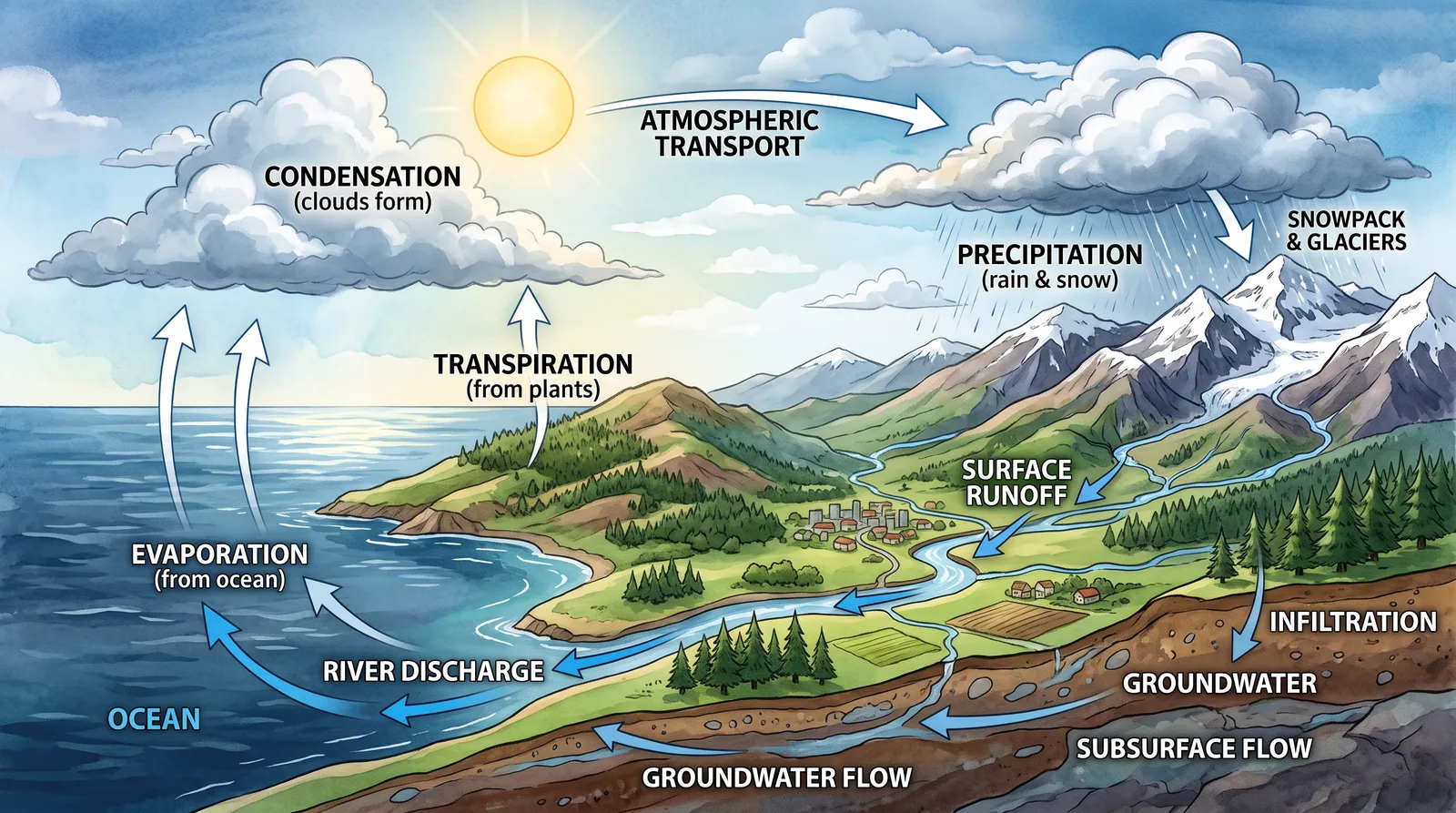
- 5.2Changes of State: Melting, Boiling, Evaporation, and CondensationComing soon
- 5.3The Water CycleComing soon
- 5.4Interpreting Tables and Diagrams in Earth Science QuestionsComing soon
PSLE Exam Mastery: Process Skills and Exam Strategies (P5–P6)
Consolidates all six topic strands with targeted exam techniques, common misconception busting, and full scientific process skill application.
- 6.1The Four Process Skills: Observe, Compare, Infer, ClassifyComing soon
- 6.2Designing Fair Tests: Variables and HypothesesComing soon
- 6.3Writing PSLE-Quality Answers with Science KeywordsComing soon
- 6.4Spotting Exam Traps and Busting Common MisconceptionsComing soon
- 6.5Full-Syllabus Revision and Mock Exam WalkthroughComing soon
Energy Conversion (P6)
Discover how energy never disappears — it just changes form! This module walks you through every type of energy conversion tested in the MOE P6 syllabus, from solar cells to buzzing circuits, so you can explain, predict, and write exam-winning answers with confidence.
- 7.1What Is Energy Conversion?Coming soon
- 7.2Forms of Energy and How to Identify ThemComing soon
- 7.3Energy Conversion in Electrical Circuits and DevicesComing soon
- 7.4Energy Conversion in Living Things and the EnvironmentComing soon
- 7.5Energy Conversion: Exam Question BootcampComing soon
Who it's for
Is this you?

The P3 Starter
Just beginning Primary Science and needs clear, friendly lessons on living things, materials, and classification to build a rock-solid foundation.

The P5 Grinder
Comfortable with content but losing marks on open-ended questions — needs the process skills, keywords, and answer frameworks to convert understanding into full marks.

The PSLE Countdown Student
In P6 with the PSLE approaching fast — needs structured full-syllabus revision, mock exam walkthroughs, and a strategy to tackle every question type with confidence.
The Supportive Parent
Wants to actively help their child at home but needs lessons clear enough to follow and a structured roadmap so nothing in the MOE syllabus gets missed.

The Conceptual Leaper
A curious P4–P5 student who grasps ideas quickly but makes careless mistakes on data interpretation and fair-test questions — and is ready to close that gap.

The Confidence Builder
Finds Science intimidating and needs a warm, step-by-step approach — from magnets and circuits to the water cycle — to replace anxiety with genuine understanding.
Questions
Frequently asked
Your teacher
A note from your teacher
Teacher
Hey there — I'm so glad you found your way here.
If you're reading this, there's a good chance you know that feeling: your child comes home with a Science paper, and somewhere between "design a fair test" and "explain how the water cycle works using the correct terms," things got a little… overwhelming. Maybe your child knows the answer — kind of — but can't seem to get the marks. Or maybe the content itself feels like a lot, jumping from life cycles to electricity to rocks to food webs, and it's hard to know where the gaps are. That feeling is real. And it's exactly what Science Basecamp SG is built to fix.
I built this school because I believe every child can genuinely understand Science — not just memorise it, but get it. The kind of understanding where you see a diagram of a food web in an exam and you're not panicking, you're thinking: "I know how this works. I know what happens when the population of one organism changes. I know how to write this answer." That confidence is what I want for every student who walks through Basecamp.
So here's what I've done. I've taken the entire MOE P3–P6 syllabus — all six major topic strands — and rebuilt it from the ground up with two things in mind: clarity and exam-smartness. Clarity means using everyday analogies, short lessons, and a "let's find out why!" approach that keeps curious kids engaged without ever talking down to them. Exam-smartness means teaching the process skills, the cause-and-effect sentence frames, the keywords, the fair-test design steps, and the common traps — the stuff that actually decides whether a student gets full marks or half marks on those open-ended questions.
I know your time is valuable, and your child's confidence matters. That's why I've made sure every lesson is self-contained and clear enough for students to work through independently, while being structured enough for parents to follow and support at home. Whether your child is in P3 just getting started, or in P6 with the PSLE on the horizon, there's a clear path forward here — and you don't have to figure it out alone.
Come join us at Basecamp. Let's build the kind of Science foundation that doesn't just get your child through the PSLE — it makes them genuinely proud of what they know. I'll see you inside.
— Teacher
Start your journey today
Get instant access — learn at your own pace with an AI coach in your corner.
$67/mo
Recurring billing · cancel anytime
This school isn't accepting enrollments just yet. Check back shortly!
Secure checkout · Instant access
- 7 modules, 34 lessons
- AI-adaptive lessons tuned to your level
- Quizzes & checkpoints to lock in progress
- Your own AI learning coach
- Learn on any device, at your pace
- Full access for as long as you're subscribed
32 more lessons coming soon at no extra cost.